Contact Ivory

She loves to chat! Use the form on the right to send her a message.

1721 Saunders Street
Columbia, SC, 29201
United States

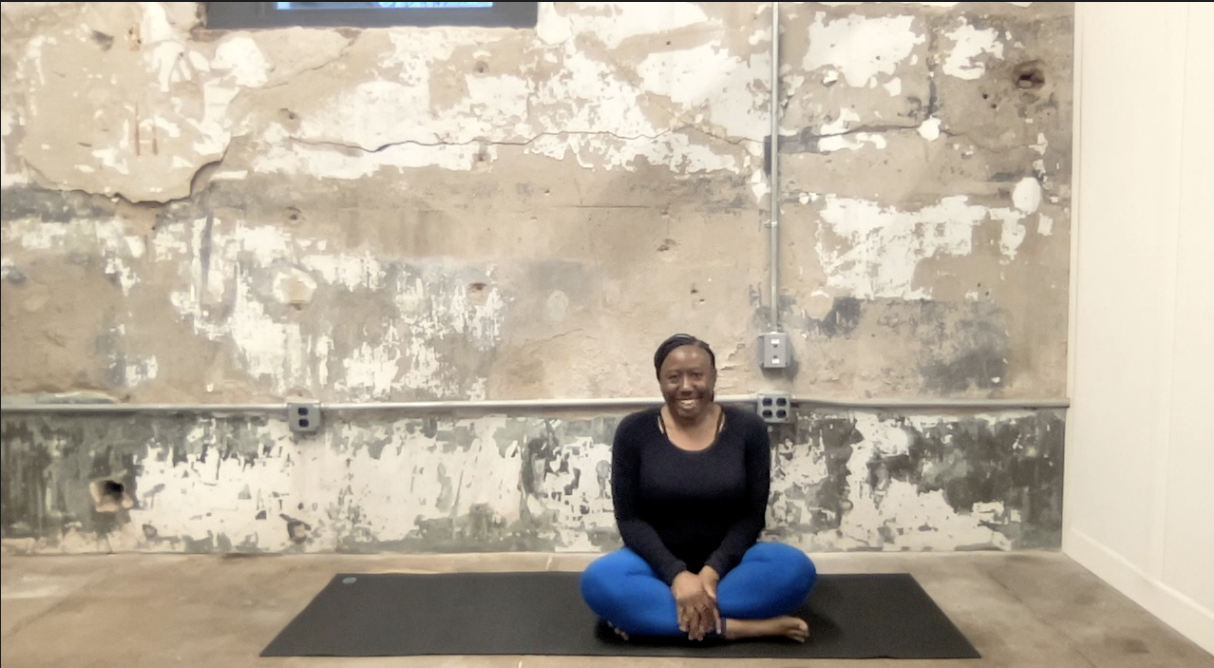
I’m Ivory Howard, a yoga and Pilates instructor who is making things easier for you by helping busy, professional women like you workout consistently and reclaim their health and fitness.

Blog

Filtering by Category: Practice Tips

That's not okay with me

Ivory Howard

I need to be honest with you about something. For the past few weeks, I've been having trouble with my email service provider. The kind of trouble that meant some of you weren't getting my messages. The kind that kept me up at night wondering if you thought I'd disappeared or stopped caring about helping you build a consistent wellness practice. That's not okay with me. Over the past 20+ years of teaching yoga and Pilates, I've learned that consistency is everything. It's the foundation of every transformation. Here's the thing about consistency: it works both ways. I can't ask you to show up consistently if I can't reliably show up in your inbox.

So I’m making a change and moving to Substack. I’m more excited about this than I've been about anything in a long time.

This isn't just about fixing email delivery issues (though yes, you'll actually receive what I send now). This is about finally building the kind of community I've always envisioned. The one where we can have real conversations, where you get direct access to me and to top experts in health, fitness, and nutrition, and where I can share the tools and strategies that actually work.

Not the surface-level stuff you can find anywhere. The real, practical strategies I've developed working with hundreds of busy professional women who are tired of starting and stopping, who want to lose weight and keep it off, who are ready to build habits that stick.

What does this mean for you? If you've been following along on my blog, nothing has to change if you don't want it to. This space will still be here with all the content you've come to rely on. But if you want more, I’m inviting you to join me on Substack. You'll get to keep in touch through weekly newsletters; community discussions; exclusive conversations with top experts in health, fitness, and nutrition; video tutorials and downloadable resources.

You know what I realized when I was having all those email troubles? All these years, I've been teaching you about modifications to adapt poses to work for your body, your limitations, your unique anatomy. About how there's no shame in using props or taking a different variation. About how the practice that serves you today might be different from the one you need tomorrow. Well, this is my modification. This is me adapting to serve you better.

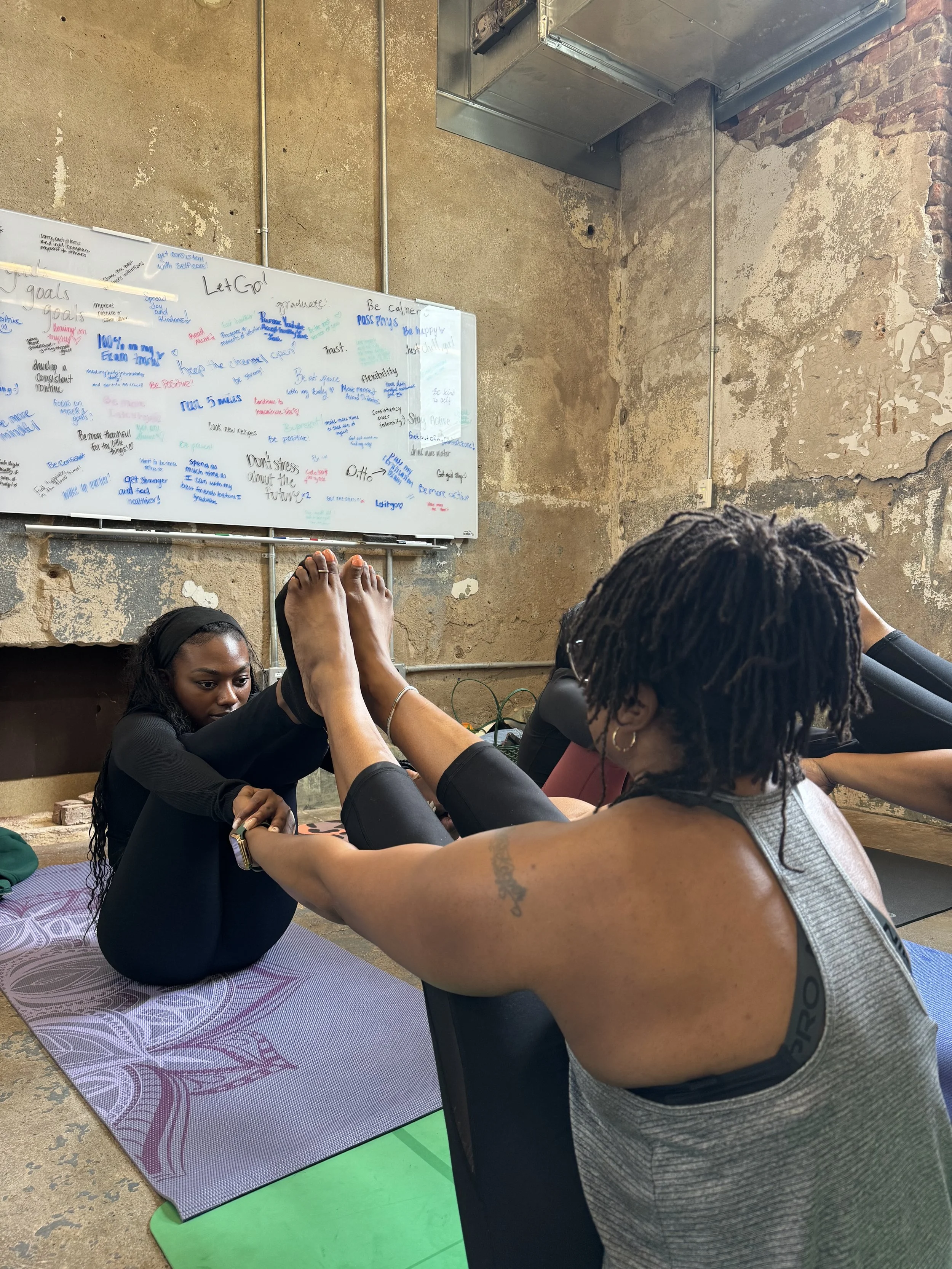
The pop-up studio chapter was incredible. Welcoming over 100 people into that space in the BullStreet District, watching you challenge yourselves in partner yoga classes, hearing someone shout "that's amazing!" in the middle of a Deep Release class are memories will stay with me forever.

Now we're entering a new chapter, and I’d love for you to join me on Substack.


Your holiday travel fitness guide

Ivory Howard

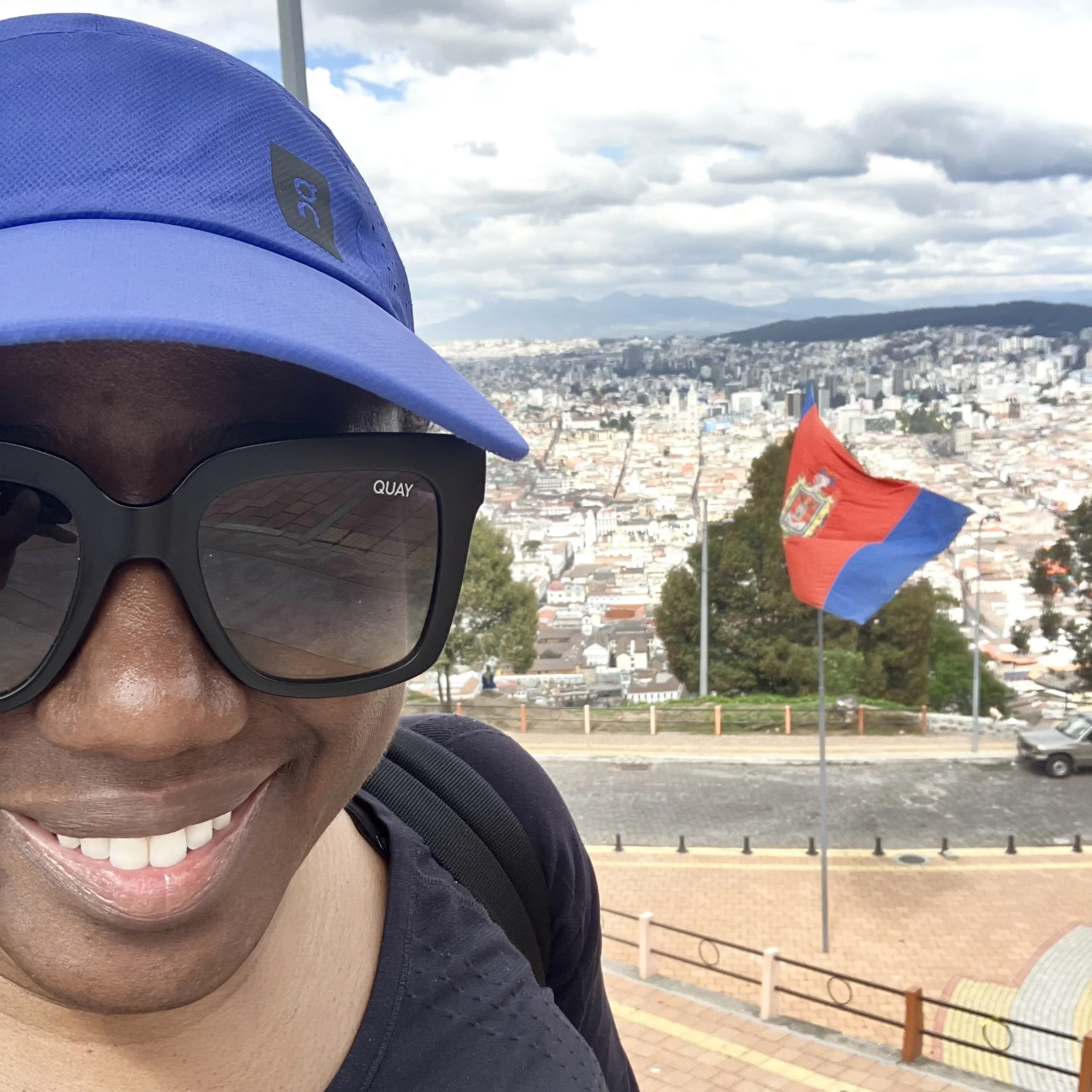
Ivory standing on a hill overlooking Quito, Ecuador.

Holiday travel season is here, and your packed schedule doesn't have to derail your wellness goals. Between client meetings in Chicago, that long-overdue vacation in Portugal, and weekend conferences, maintaining your fitness routine while traveling can feel impossible. But what if staying active on the road could actually boost your energy and sharpen your focus for those important presentations?

Traditional gym-dependent routines don't work when you're living out of a suitcase. What’s the solution? Strategic, equipment-free practices that adapt to any hotel room, airport gate, or conference center.

In this newsletter, you'll discover:

As a fitness instructor with more than 20 years of experience and a frequent business traveler who's maintained routines across six continents, I understand the unique challenges professional women face when trying to stay fit on the road.

Your holiday scheule doesn't have to be about choosing between career success and personal wellness. Let's make this the season you prove you can excel at both.

Ready to transform your travel routine from survival mode to strength mode? Book a session with me.


150 Minutes a Week: A Simple Exercise Plan That Prevents Chronic Disease

Ivory Howard

Mother and daughter in partner yoga class.

Feeling stuck in a sedentary lifestyle? You're not alone. Between commuting, desk work, and exhausting schedules, finding time to prioritize your health can feel impossible. But it doesn't have to be!

In this video, I share practical strategies for busy professional women to break free from sedentary habits and build a consistent workout routine—no fancy equipment or gym membership required.

What you'll learn:

  • Why movement is essential for preventing chronic illnesses like diabetes, stroke, and cancer

  • How to fit 150 minutes of exercise into your busy week

  • The power of yoga and Pilates for strength, balance, and flexibility

  • How to set SMART goals that actually stick

  • Why you DON'T need expensive workout gear to get started

  • Tips for staying accountable and maintaining consistency

Want more? Download my free guide on how to survive your first (or next!) Pilates class.


How to do crow pose

Ivory Howard

When I started my yoga teacher training, I couldn’t do crow pose. I couldn’t do any arm balances. I didn’t know if I’d be able to do, crow pose, the beginner arm balance in the sequence I was training to teach, by the end of my yoga teacher training. In my first teacher training session, I was nervous because I didn’t know if I’d ever be able to do this pose. The teacher trainers assured us that we didn’t have to know how to do crow pose by the end of the training.

So I trusted in the process. I listened to my trainers. I showed up to the training sessions. I practiced consistently. I taught several classes. I completed 50+ classes for my personal practice during the three-month training. I practiced crow pose. I didn’t quit. I kept going.

Little did I know that I had everything I needed to do crow pose on day one. I just needed to shed the things that were holding me back. When my training ended, I was able to do crow pose and several other arm balances. Arm balances became one of my favorite ways to enjoy my yoga practice.

If you want to deepen your yoga practice or learn how to do crow pose, book a session and subscribe to my YouTube channel.

Crow Pose

Here's how to do crow pose for beginners. At times, it may seem that everyone is able to fall into a splits, catapult into a handstand and fly in crow pose (Kakasana) but don't be fooled. Practice makes progress. Move at your own pace and know that is truly enough.

The easiest way to get into crow pose is from downward facing dog walk your feet forward so that your knees are close to your armpits and your fingers are spread  wide. Rotate your arm not your hand so that the eyes of your elbows face forward then bend your elbows straight back just like you would for high to low plank (Chaturanga Dandasana). Then, create a shelf for knees and begin to place more weight in your hands than in the feet. It's an exercise and trust when you're ready lift one leg. Then, lift the other and, when you're ready, lift both. Use your abdominal muscles to keep your upper body lifted.

Eight angle pose

Take a look to see how to practice eight angle pose (Astavakrasana). Don't forget to focus on foundational poses like chair pose, high to low plank, and core work to train and prepare your body and mind for this pose. You’ll lay a solid foundation, build strength and increase flexibility for more advanced poses.

Place your foot in your elbow nook and rock it side to side just like you would for a baby. Allow your hip to open up it might take a bit of time so just be patient. Then lift your leg over your shoulder. I know it's not easy but just try to get your leg as far on your shoulder as you can. The higher up it is the easier it will be to stay in this pose. Be patient with yourself it will happen. Place your hands down. Use your chaturanga arms, the same arms that you would use for high to low plank. Place the feet together, extend the legs, and squeeze the thighs together. When you’re ready, come down as gracefully as you can.


Why you feel instantly calm after yoga

Contributor

What if I told you there's a single nerve in your body that controls your stress levels, digestion, heart rate, and immune response. Meet the vagus nerve – the hidden superhighway between your brain and body that most people have never heard of, but that's influencing almost every aspect of your health and wellbeing right now.

In this three-part series, let’s talk about one of the most fascinating and powerful systems in your body and how you can activate it to relax anytime.

Part 1: What is the vagus nerve and why does it matter? We'll explore how this mysterious nerve works and why scientists are calling it the key to understanding stress, anxiety, and chronic health issues.

Part 2: Simple vagus nerve activation techniques you can do anywhere in under two minutes. I’ll guide you through the powerful “box breathing" method that instantly shifts your nervous system from stress mode to calm.

Part 3: Here’s a surprisingly simple pressure point technique that sends immediate safety signals to your brainstem. I’ll show you exactly how to position your hands to stimulate key receptors along your head and cervical spine, triggering your vagus nerve's relaxation response in seconds. This one is perfect for moments of acute stress or anxiety.

Your vagus nerve is the remote control to your nervous system – it's time you learned how to use it.


Studio Equipment Sale

Ivory Howard

As the pop-up studio experience ends, I’m offering our gently used yoga mats, props, and equipment to our beloved community at special prices.

Available items include:

  • Yoga mats of various thicknesses and styles

  • Foam yoga blocks

  • Meditation cushions

All items have been well-maintained and sanitized. This is a perfect opportunity to build your home studio!

Interested? Don’t wait. Prices start at $13 and limited quantities are available.


Let's celebrate

Ivory Howard

As we close the doors on our pop-up studio experience on October 15, my heart is overflowing with gratitude and joy for what we've created together.

What an incredible journey it's been. When I first opened this pop-up studio, I dreamed of building a welcoming community where students could deepen their practice, connect authentically, and find moments of peace in their busy lives. You didn't just help us achieve that dream – you exceeded it in every possible way.

Together, we've:

  • Shared countless hours of mindful movement and breath

  • Created a space where everyone felt welcome, regardless of experience level

  • Explored new poses, breathing techniques, and meditation practices

What made the pop-up truly special wasn't just the physical space – it was each and every one of you. Your dedication, openness, and willingness to show up authentically created the warm, supportive atmosphere that defined this studio. You turned a temporary space into a true sanctuary.

The conversations before and after class, the way you welcomed newcomers, your commitment to your personal growth, and the genuine care you showed for one another – these are the moments to treasure forever.

While the physical doors are closing, our community is stronger than ever, and I’m incredibly excited to continue growing together in our virtual space.

Virtual Live Classes: Experience the same quality instruction and community connection from wherever you are. Our interactive format means you'll still feel that sense of togetherness we've cultivated.

Online Course: Dive deeper into your practice with our comprehensive online program, designed to support your growth whether you're a beginner or looking to advance your skills.

The same heart, intention, and personalized attention you've come to expect will continue to flourish in our online offerings. Plus, you'll have even more flexibility to practice when it works best for your schedule.

Although pop-ups aren’t forever, this isn't goodbye. It’s simply the next chapter of our journey together. I’m grateful that technology allows us to maintain the connections we've built and welcome new students into our growing online community.

Your virtual mat is waiting, and I can't wait to see your familiar faces on screen and continue supporting each other's growth and transformation.

Thank you for making the pop-up dream a reality. Thank you for your trust, your vulnerability, your laughter, and your presence. Thank you for proving that yoga truly is about connection – to ourselves, to each other, and to something greater.

The memories we've created in our physical space will live on, and the community we've built will continue to thrive online. I’m honored to have shared this special time with you and excited for all the virtual adventures ahead.

Ready to join me online? Book a session.

Our online yoga programs will continue and grow stronger. You'll still have access to:

  • Virtual live classes

  • On-demand sessions

  • Personalized online instruction

  • Our supportive online community

Frequently Asked Questions

Q: Will my gift certificate transfer to online sessions? 

If you have existing gift certificates, here's what you need to know: 

  • Before studio closure, gift certificates can be used for remaining in-person group classes and virtual sessions.

  • After studio closure, gift certificates will be valid exclusively for virtual sessions.

Q: Will my class packages transfer to online sessions? 

Yes, any remaining class credits will seamlessly transfer to our virtual platform.

Q: What if I prefer in-person classes? 

No problem. Please use your remaining credits for our in-person group classes on or before October 15. 

Q: How do I book virtual sessions? 

Visit https://ivoryhoward.as.me to book a session.

Q: What about private sessions? 

Private virtual sessions will continue as normal. Visit https://ivoryhoward.as.me to schedule a session.

While we'll miss gathering together in our physical space, I’m genuinely excited about the possibilities this transition brings. The virtual platform allows me to:

  • Offer more class times to fit your schedule

  • Provide specialized workshops and series

  • Build an even stronger online community

  • Serve students beyond our local area

I know change can feel uncertain, and I’m here to support you through this transition. Please don't hesitate to reach out.

Thank you for being part of this yoga journey. Your presence, energy, and commitment to your practice have made this pop-up studio experience truly special. I look forward to continuing to practice together online and supporting your yoga journey in new ways.


This is why you feel so calm after yoga class

Ivory Howard

This is why you feel so calm after yoga class

Have you ever wondered why you feel so much calmer after a yoga class? Or why that deep breath during a stressful moment actually works to settle your nerves? The answer lies in understanding the vagus nerve.

What Is the Vagus Nerve?

The vagus nerve is the longest nerve in your body, running from your brainstem all the way down to your abdomen, connecting your brain to major organs like your heart, lungs, and digestive system. The vagus nerve is the main component of your parasympathetic nervous system—that's your "rest and digest" mode, as opposed to the more familiar "fight or flight" response. When your vagus nerve is activated, it sends a clear message throughout your body: "Hey, we're safe. Time to relax, repair, and restore."

Your vagus nerve has direct connections to your diaphragm and breathing muscles. When you breathe deeply and slowly, you're literally massaging this nerve, sending signals that activate your body’s relaxation response. When you take a slow, deep breath in through your nose, your diaphragm drops down and your ribcage expands. This gentle stretching stimulates vagus nerve receptors throughout your torso. This is why breath control, or "pranayama" in yoga tradition, is so central to these practices. We're not just filling our lungs with air; we're actively engaging our body's stress-relief system.

Let’s break down what's actually happening in your body during deep breathing. When you engage in slow, intentional breathing:

  • Your heart rate slows down

  • Your blood pressure decreases

  • Stress hormones like cortisol drop

  • Feel-good neurotransmitters increase

  • Your digestive system comes back online

  • Your immune system gets a boost

I see this transformation happen in my studio every single day. Students walk in carrying the weight of their day—shoulders tight, breathing shallow, minds racing. By the end of class, after we've spent time focusing on deep, intentional breathing, their faces are softer, their shoulders have dropped, and they move through the world with more ease.

Box Breathing

Ready to experience this for yourself? Try box breathing. You can do this anywhere—at your desk, in your car, or on your yoga mat.

Sit comfortably with your spine tall. Place one hand on your chest, one on your belly. Close your eyes or soften your gaze downward. Breathe in through your nose for 4 counts. Hold your breath for 4 counts. Exhale through your nose for 4 counts. Hold empty for 4 counts. Repeat this cycle three times, then notice how you feel compared to when you started reading this post. That shift you might be experiencing? That's your vagus nerve doing its job.

You now have a powerful tool available 24/7. You literally carry a stress-relief tool with you everywhere you go—no apps required, no equipment needed, just your own breath. Consider using box breathing when you're:

  • Stuck in traffic and feeling frustrated

  • About to give a big presentation

  • Lying in bed unable to fall asleep

  • Feeling overwhelmed by your to-do list

  • Transitioning between different parts of your day

In my classes, I always remind students that the breath work we practice on the mat is preparation for life off the mat. Every time you choose to breathe deeply instead of holding your breath during stress, you're strengthening your body's natural ability to return to balance. The next time you feel stress creeping in, remember that you have the power to activate your body's natural relaxation response. Take that deep breath, engage your vagus nerve, and trust in your body's remarkable ability to find calm in the midst of chaos.

Your nervous system is designed to help you thrive, not just survive. Sometimes all it takes is remembering to breathe deeply and letting your body do what it already knows how to do best.

Ready to give it a try? Take a look at this week’s studio schedule and join me for class or sign up for an upcoming workshop.


Stress

Contributor

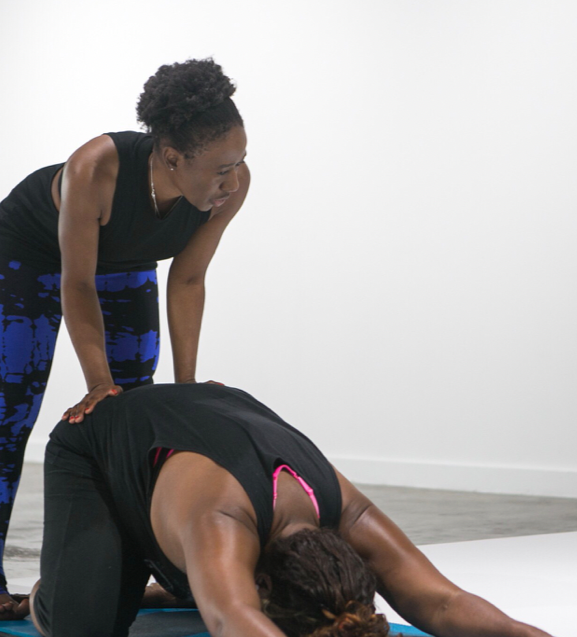
Ivory gives hands-on assist to student in child's pose.

We need to talk about stress.

A single season of stress can accelerate your biological age by years.

Unlike your calendar age, biological age measures how your body is aging at the cellular and molecular level. It's calculated from biomarkers tied to inflammation, metabolism, detoxification, and immune function—and it's one of the most powerful predictors of longevity and future disease risk.

The good news: biological aging is reversible. The stress damage isn't permanent, and your yoga and Pilates practice is one of your most powerful tools for turning back the clock.

Biological age can move both ways. Stress pushes it forward, but smart choices can slow it down or even reverse it. Not all stress is created equal, and understanding the difference is crucial for your health.

Chronic Stress is the aging accelerator. It keeps your body in constant survival mode, elevates cortisol around the clock, prevents proper recovery, and chips away at cellular health daily.

Hormetic Stress (the age reverser) includes short, controlled bursts of beneficial stress like challenging yoga poses, cold exposure, or intermittent fasting. It triggers your body's repair pathways and builds resilience. For example, your yoga and Pilates practice brilliantly provides hormetic stress while helping you recover from chronic stress.

Chronic stress isn't just emotional—it creates measurable biological changes including increased inflammation, cortisol disrutpion, glucose spikes, weakened immunity, and DNA damage. Every time you step onto your mat, you're actively reversing these stress-induced signs of aging.

Here's what's incredibly exciting: every conscious breath you take, every mindful movement, every moment of present-awareness is actively rewriting your biological age. You're not just exercising—you're triggering cellular repair pathways, optimizing hormone balance, reducing inflammation at the DNA level, building stress resilience, and literally turning back your biological clock.

Here’s your anti-aging challenge:

  • Attend 2-3 classes focusing on breathwork and movement per week

  • Make your practice non-negotiable during high-stress periods

  • Experiment with beneficial stressors like cold showers or challenging poses

  • Create boundaries that protect your recovery time

A single season of stress can age you by years—but a single season of mindful practice can reverse that damage. Your biological age is not fixed. Every time you choose your mat over your couch, breath awareness over reactive stress, presence over pressure, you're making a cellular-level investment in your longevity.

The science is clear: stress ages you, but your practice can reverse it.

Ready to reverse your biological age? Take a look at this week’s studio schedule and join me for class or sign up for an upcoming workshop.

* Function Health. (April 2025). Stress is aging you faster than you think—here's how to slow it down.


Move or die

Contributor

New groundbreaking research from the University of Colorado and Johns Hopkins University has identified the most powerful predictor of how long you'll live—and it's not what you might expect. After analyzing data from over 3,600 people aged 50-80*, scientists compared 15 different health markers to see which ones best predicted longevity. The winner wasn't cholesterol levels, blood pressure, or even age. It was physical activity—how much and how vigorously you move throughout your day. As Outside Magazine writer Alex Hutchinson* puts it "how much and how vigorously you move are more important than how old you are as a predictor of how many years you've got left."

The results showed that physical activity ranked as a better predictor of longevity than:

  • Having diabetes or heart disease

  • Cancer diagnosis

  • Age

  • Body mass index

  • Smoking status

The best part? Unlike genetics or age, movement is something we can control.

Every time you step onto your mat, you're investing in your future self. Our classes don't just help you feel better today—they're building the movement patterns and strength that research shows can extend your life.

Here's how your practice contributes to longevity:

  • Consistent Movement: With yoga and Pilates you can build a sustainable daily practice that research shows is the strongest predictor of longevity

  • Functional Strength: We build the mobility and stability that prevent the movement restrictions related to aging

  • Mind-Body Connection: Our practices reduce stress and improve sleep—both crucial for longevity

  • Sustainable Habits: Unlike extreme fitness regimens, yoga and Pilates create sustainable movement practices you can maintain for life

When you workout consistently, you're choosing a longer, healthier life.

Ready to get started? See the studio schedule and sign up for class.

*Leroux, Andrew & Cui, Erjia & Smirnova, Ekaterina & Muschelli, John & Schrack, Jennifer & Crainiceanu, Ciprian. (2024). NHANES 2011-2014: Objective Physical Activity is the Strongest Predictor of All-Cause Mortality. Medicine and science in sports and exercise. 56. 10.1249/MSS.0000000000003497.

*Hutchinson, Alex. (2025). Want to Live Longer? You Better Start Moving—All Day Long. Outside Magazine.


5 Signs you need to modify your yoga practice

Contributor

Picture this: You're in a yoga class, struggling through a pose that everyone else seems to be doing effortlessly. Your inner voice starts the familiar chatter: "I'm not flexible enough," "I'm not strong enough," or "Maybe yoga just isn't for me."

Sound familiar?

Here's the truth that might surprise you: The problem isn't with you or your body. The problem is that you haven't learned how to modify your practice to work with your unique anatomy, needs, and limitations.

Yoga modification isn't about "cheating" or being "less than." It's about honoring what your body needs in this moment.

So how do you know when it's time to embrace modifications? Here are five clear signs:

1. You're holding your breath during poses

The Sign: You notice yourself holding your breath, breathing shallowly, or feeling like you can't breathe comfortably while in a pose.

Why This Matters: Breath is the foundation of yoga practice. When you can't breathe freely, your nervous system goes into stress mode, which defeats the purpose of yoga entirely. If you're holding your breath, the pose is too intense for your body right now.

The Solution: Back out of the pose until you can breathe easily and naturally. Use props like blocks, straps, or bolsters to make the pose more accessible. Remember: If you can't breathe in it, it's not serving you.

Try This: In forward folds, place blocks or a bolster on your thighs so you don't have to reach so far. In twists, sit on a blanket or block to elevate your hips and make the rotation easier.

2. You experience pain

The Sign: Sharp, shooting, or persistent pain during or after practicing certain poses.

Why This Matters: There's a difference between the sensation of stretching or working muscles and actual pain. Pain is your body's warning system telling you something isn't right. Ignoring pain can lead to injury and set back your practice for weeks or months.

The Solution: Learn to distinguish between discomfort (which can be okay) and pain (which is not). When you feel pain, immediately ease out of the pose or skip it entirely. There's always another way to work the same areas of your body safely.

Try This: In poses like camel or wheel, if your lower back hurts, try supported heart openers with blocks or bolsters instead. For wrist pain in arm balances, try forearm variations or use yoga blocks to change the angle.

3. You're constantly comparing yourself to others

The Sign: You spend more time looking around the room than focusing on your own practice. You feel frustrated when you can't do what others are doing.

Why This Matters: Comparison is the thief of joy—and progress. Every body is different. Your hip structure, limb proportions, and flexibility will never be exactly like someone else's. When you're focused on others, you're not listening to your own body's needs.

The Solution: Start treating your mat as your personal laboratory. Experiment with what feels good for your body. Use props without shame and modify poses without apology.

Try This: In poses like triangle or side angle, don't worry about reaching the floor. Rest your hand on your shin, a block, or your thigh instead.

4. You dread certain poses or sequences

The Sign: There are poses that make you want to skip class or that you approach with anxiety rather than curiosity.

Why This Matters: Yoga should challenge you, but it shouldn't make you miserable. If you consistently dread certain poses, it may be because they don't work for your body in their traditional form.

The Solution: Give yourself permission to modify or skip poses that don't serve you. Work with your instructor to find alternatives that provide similar benefits without the stress.

Try This: Hate chaturanga? Try lowering your knees to the ground first, or skip the low push-up entirely and move directly from plank to upward dog or cobra. Dread headstand? Try supported shoulderstand or legs-up-the-wall pose instead.

5. You leave class feeling depleted instead of energized

The Sign: You consistently feel exhausted, sore, or emotionally drained after practice instead of feeling balanced and renewed.

Why This Matters: While yoga can be challenging, it should ultimately leave you feeling better than when you started. If you're regularly leaving class feeling worse, you're likely pushing too hard or practicing in a way that doesn't honor your current needs.

The Solution: Scale back the intensity. Take child's pose whenever you need it. Choose gentler variations of poses. Remember that yoga is a practice of self-care, not self-punishment.

Try This: Give yourself permission to take breaks and use more props to support your body. Listen to what you need that day—it might be different every time you practice.

Modifications aren't a sign of weakness or failure. When you modify a pose, you're honoring your body's current needs, preventing injury, and building a sustainable practice.

Here's what you can do right now:

  1. Start small: Pick one pose that's been challenging you and research a modification

  2. Invest in props like yoga blocks, straps, and bolsters.

  3. Communicate with your instructor: Let them know what's not working for you and ask for a modification.

  4. Practice self-compassion: Be as kind to yourself as you would be to a good friend

If you're in the Columbia, SC area and want to dive deeper into making yoga work for your unique body, join me for the Yoga for Your Body workshop on Saturday, August 23 at 12 pm. We'll explore practical modifications for common poses and help you build confidence in adapting your practice.
* Function Health. (April 2025). Stress is aging you faster than you think—here's how to slow it down.


The pressure

Ivory Howard

I feel a lot of pressure right now. We just passed Quitter’s Day, the day many people give up on their New Year’s resolutions. Wouldn't it be amazing if I wrote an incredibly motivating blog post to inspire you into 365 days of action where your fitness level improves, your health is better than it was in your 20s, and for the first time in your life you effortlessly fall into middle splits?

Ha, I wish! Allow me to come back to reality and hit the pressure relief valve for both of us. Welcome to 2025. Where you will continue to have to learn, work, and be consistent. Nothing comes overnight. And the new year isn't a magic pill. But I hope there's relief in that. Keep putting in the work like you've been doing. And things will start to take shape.

Here's how to reach your health and fitness goals with ease this year.

1. Find community. A research study, published in the New England Journal of Medicine, followed 12,067 people for more than thirty years found that people were at a greater risk of becoming obese when a close friend became obese. Researchers report that obesity can spread from person to person, much like a virus. There's good news too. Investigators say that the same effect seemed to occur for weight loss.

2. Set SMART goals. Research shows that people are more likely to accomplish their goals when they are SMART. Instead of a general goal like “I will workout,” try “I will take hot yoga classes three times a week on Monday, Wednesday, and Friday after work.” This goal is specific, measurable, attainable, realistic, and time-bound.

3. Tell everyone and hold yourself accountable. Social networks have a significant influence on your healthy (and unhealthy) lifestyle habits. When your friends, family, and coworkers learn about your goals, they will hold you accountable and check-in with you often to hear about your progress. Also, consider getting an accountability partner is simply someone you report regularly on the progress of your goal. An accountability partner can also encourage and push you to deliver on your goal.

Keep going. Showing up everyday really is the secret to your success.


Avoid the Biggest Fitness Mistakes

Ivory Howard

So when it comes to health and fitness, we all make mistakes.

Have you ever said to yourself:

  • I’ll manage my health and fitness in the New Year.

  • I'll start working out in the New Year.

  • I'll pay better attention to my health in the New Year.

If you said any of these things or felt any of these feelings, then you are definitely in the right place. You are definitely not alone. I have made these mistakes and have made many more.

Let’s talk about some of those mistakes that can derail our efforts to workout consistently and how to avoid them.

First, you don't have a plan.

One of the biggest ways that you can sabotage your efforts to workout consistently is by not having a plan. It can feel daunting to try and figure out, where to start, what to do, and how to make it all work. You need a structured plan to make it work. The key is to set your health goals and develop a structured plan so that you maintain a consistent workout routine.

Having a plan will make sure that you are able to not just work out, but work out consistently. There are many things you need to consider when you are developing your health goals and a structured plan, not just what you’ll do, but what time you’ll workout, how long you’ll workout, and how you’ll you stay accountable.

Set aside some time to think about your goals and develop a plan. Grab a pencil and paper and write down your goals. Be sure to consider what you'll do when you workout, whether you go to the gym or the studio, what time you’ll workout, how long you’ll workout, what days you’ll workout, how will you stay accountable.

These are all very important things. They seem simple and you may be tempted to  not pull out that pencil and paper. But it's really important to write down your goals and your plan so that you remember them and can refer to them often.

Second, you don't have an instructor.

Random classes aren't gonna work. One day, you’re on YouTube. Another day, you’re on Pinterest, and another day, you're doing your saved Instagram and Facebook workouts. But you don't need to do everything, to get the results you want. You just need to do the right things. Try a proven method to reach your health goals rather than a series of random workout videos.

You don't have to do it all alone. There are others who’ve already been on this journey, and they can share their plans for success with you and help you stay accountable and workout consistently. So it's really important to have an instructor, a coach, or a trainer - someone that you can work closely with and discuss your health goals, your health plan, and certainly chat about any difficulties that you might have and stay accountable which is really important.

Third, you don't take your rest days seriously.

Take your rest days seriously. They're just as important as your workout days, because they assist in healing and preventing injuries. They're also great days to focus on meditation or reading more about fitness, yoga, and Pilates.


Have you ever been late to yoga class?

Ivory Howard

Have you ever been late to yoga class and found that the studio doors were locked?

If you're late to yoga class, you're most likely missing the teacher's introduction, intention, and theme for class. You're also probably carrying that rushed feeling and that rushed energy into yoga class.

I once had a student come late to yoga class. She rushed in. The entire class, she felt that things weren't moving fast enough, and at the end, she skipped corpse pose. Because she was late to class, she was never able to come to a place where she could leave behind that rushed feeling and be present in class.

When you're going to yoga class, allow yourself plenty of times that you can leave behind your to do list, become present, and practice in an unhurried way. To help you do this, studios close the doors before class.

This isn't just about studio classes. You should allow yourself the same amount of time when you practice at home. Allow yourself plenty of time to put aside your to do list and be present on your mat.

Let me know in the comments if you notice a difference when you allow yourself plenty of time before class to be present on your mat.


7 best fitness tips for busy women

Ivory Howard

Here are my 7 best fitness tips for busy women who want to workout consistently and reclaim their health with ease.

1. Exercise everyday. Making time for physical activity helps you prioritize wellness, put your priorities first, and quiet the negatives influences in your life.

2. If you haven't found a workout you enjoy yet, walk everyday. It's a physical activity cheat code.

3. Focus on your practice before investing in props and accessories. It will take sometime before you know what you like and don’t like. Once you’ve been practicing for sometime, you’ll know what you need for your personal practice. When you’r ready, here's my list of recommended supplies for beginner and experienced students.

4. If you don't have time for an hour-long class, try doing child's pose, sun salutation A and sun salutation B, and corpse pose in the morning to start your day.

5. Rest is essential. Take your rest days seriously.

6. Think of one small thing you can do RIGHT NOW to reach your goal and do it. Don't wait. Just do that one small thing. Working out consistently is just a series of small things like picking out a workout outfit before bed so you don't have to decide in the morning or working out for 10 minutes because that's all you have time or energy for.

7. Try plant-based protein and spread it out throughout the day so that it's in every meal and snack. Here's a list of protein-rich sources:

Vegetables - broccoli, spinach, asparagus, artichokes, potatoes, sweet potatoes, Brussel sprouts, greens

Fruits - guava, mulberries, blackberries, nectarines

Beans - lentils, chickpeas, edamame, soybeans, peas, legumes

Grains - quinoa, oats, wild rice, sprouted grains, corn

Seeds - pumpkin, chia, hemp

Nuts - peanuts, almonds